Where to Buy Galvanized Iron Drums in China?

China’s scale makes it a practical place to source a galvanized iron drum, but national steel output cannot identify a reliable drum supplier by itself. The World Steel Association’s World Steel in Figures 2024 reports that China produced about 1,019 million tonnes of crude steel in 2023. That figure gives useful industrial context, not a measure of drum production or export availability. Details matter. Buyers should compare drum capacity, steel thickness, zinc coating, seam quality, closure design, and inspection records. Ask for proof. A clear product specification and a sample inspection can reveal more than a polished catalogue.

This guide explains where to look in China, what supplier evidence to request, and how to compare quotations without treating the lowest price as the best value. Check whether the factory can document its coating process and provide consistent measurements across batches. A drum may look sound under showroom lights, yet show uneven coating around its seams; small defects can complicate storage and handling. One limitation deserves attention: a supplier’s claims are not independent verification. Request dated test records and confirm that they match the quoted product. The material provided for this introduction contains no verifiable named expert quotation, so attributing one would risk inventing evidence. Instead, the advice here is grounded in a cited industry report and practical procurement checks. Use the data as context, then verify the actual drum.
Where to Buy Galvanized Iron Drums in China?

Understanding Galvanized Iron Drum Types and Specifications

Galvanized iron drums are steel containers with a zinc coating that helps limit corrosion. Their useful life still depends on coating quality, storage conditions, and the product inside.

ISO 15750-1 and ISO 15750-2 distinguish removable-head and non-removable-head steel drums. The first has a detachable lid; the second has a fixed top with filling openings. Choose by filling method, cleaning needs, and closure requirements.

Small details matter.

When comparing Chinese suppliers, request the nominal capacity, body and lid thickness, zinc-coating specification, seam construction, closure type, and leak-test method. A 200-liter drum may be common, but usable capacity and dimensions can vary. Do not treat “galvanized” as a complete specification; it is not.

Ask for a data sheet and inspect a sample, especially around seams and the lid edge.

APEAL’s 2023 industry update reported an 80.5% steel-packaging recycling rate in Europe for 2022. That figure is regional, not a drum-specific result or a measure of Chinese recycling. It does show why material and coating details deserve clear documentation.
Where to Find Drum Manufacturers and Suppliers in China

Where to Find Drum Manufacturers and Suppliers in China

China’s drum suppliers can be found through industrial directories, trade exhibitions, and regional manufacturing networks. Search for manufacturers that produce galvanized iron drums directly, rather than relying only on trading companies. A factory visit, when practical, can reveal more than a catalog: look at forming equipment, welding stations, and finished drums stored for inspection. Details matter.

Send suppliers the same specifications for a fair comparison. Include drum capacity, sheet thickness, closure style, surface finish, and intended use. Ask how they check seams, coating coverage, and dimensional consistency. Request recent inspection records and a sample before placing a large order. A sample feels ordinary, but it can expose a loose lid or uneven coating quickly.

Check production capacity, lead times, packaging methods, and communication response times. Clarify whether quoted prices include tooling, packing, and shipping to your destination. A polished catalog is not proof of stable quality. I would not rely on one checklist alone; a responsive contact can still overlook a small specification change. Keep agreed details in writing, and compare the delivered sample with the final production requirements.

Where to Buy Galvanized Iron Drums in China?

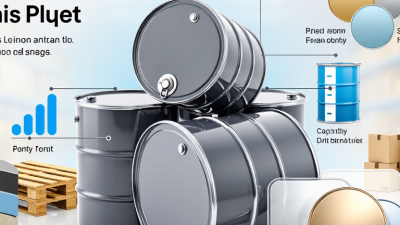
Compare common nominal capacities when evaluating drum manufacturers and suppliers.

These are representative nominal capacities for steel drum and pail formats, not a measure of supplier availability or market share. Confirm capacity, dimensions, lining, and specifications directly with suppliers.

How to Compare Supplier Capabilities and Product Quality

When sourcing galvanized iron drums in China, assess the supplier’s process, not just the quoted price. Ask whether the factory controls sheet thickness, forming, welding, and coating inspection in-house. A useful answer names specific checks and includes recent inspection records. Vague promises are a warning. Check the details.

For a sample, inspect the galvanized surface under bright light for bare patches, blisters, or uneven coverage. Check the seams for rough edges and visible gaps. Confirm the drum’s dimensions, steel thickness, lid fit, and closure type against your written specification. Ask how leak tests are performed and how failed units are recorded. These details matter more than a polished brochure.

Production capacity also deserves evidence. Request a realistic lead time, monthly output range, and an explanation of how the supplier handles material shortages or quality problems. Review test reports and certificates, and confirm they apply to the product being quoted. A sample is useful, but it cannot prove every production batch will match. That limitation is easy to overlook. If possible, arrange a third-party inspection before shipment and keep agreed tolerances in writing.

How to Verify Certifications, Pricing, and Delivery Terms

When sourcing galvanized iron drums in China, verify the factory’s documents against the exact drum specification. Ask for the certificate number, issuing body, validity dates, and covered production site. Then confirm that the stated standard applies to the drum, not merely the supplier’s general quality system. Request recent test records for sheet thickness, zinc coating, weld seams, and leakage. A certificate scan can look convincing. It is not enough.

The World Steel Association’s World Steel in Figures 2025 reports that China produced about 1,005 million tonnes of crude steel in 2024. That scale indicates a large supply base, but it does not prove any factory’s consistency. Compare quotes using the same capacity, steel gauge, coating requirement, closure type, order quantity, and inspection scope. Ask whether the price includes export packing, loading, and inland transport. Small omissions matter. For delivery, get the production lead time, shipment window, named Incoterm, and responsibility for pre-shipment inspection in writing. Request dated production photos or a sample inspection report. I would still leave room for doubt: schedules can slip, and a polished quotation cannot prevent it.

How to Place an Order and Arrange Shipment

Before requesting a quotation, define the drum’s capacity, dimensions, steel thickness, closure style, coating requirements, and intended use. Ask whether the drums are new, how their seams are checked, and what production tolerances the supplier can maintain. Send a written specification, not just a photo. Request a sample or clear production photos showing the body, lid, gasket, and galvanized finish. Confirm the minimum order, unit price, lead time, payment schedule, and quotation validity in writing. Small details matter. Before mass production, approve a sample or an inspection checklist, and request measurement records where practical. A sample may not reveal every production variation, so keep that in mind.

For shipment, provide the destination port, order quantity, preferred shipping window, and delivery terms when comparing freight options. Ask how the drums will be secured and protected from scratches or moisture during handling. Confirm container loading plans and whether the drums can be stacked safely. Request the commercial invoice, packing list, and transport document, then check that quantities and descriptions match your order. Agree on who books the freight and who handles export arrangements before paying the balance. Leave time for inspection and document review; schedules can slip, even when the factory’s estimate looks precise.