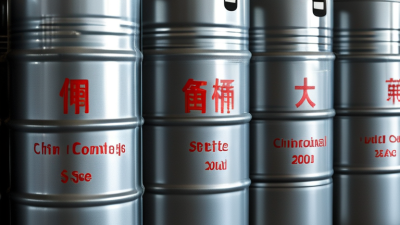
7 Tips for Buying an Empty Iron Drum

An empty iron drum can look simple on a product page. The details underneath matter. Capacity, steel thickness, seam quality, coating, and closure design all affect how it handles storage and transport. A drum that looks sturdy in a photograph may still be unsuitable for a particular product or filling process. Not every drum fits.

Industry data offers useful context, but not a substitute for inspection. APEAL’s 2022 Steel for Packaging report put Europe’s steel packaging recycling rate at 80.5%. That regional figure reflects packaging recovery, not the condition or lifespan of any individual drum. It does, however, underline why material quality and end-of-life planning deserve attention. Ask suppliers for clear specifications, product photos, and documentation for the exact model—not just a general catalogue page.

A careful buyer also checks dimensions, tare weight, lid or bung configuration, and whether the interior coating matches the intended contents. Confirm how the drums will be palletized and delivered; small differences can affect handling and storage space. These checks may feel fussy. They are cheaper than discovering a mismatch after delivery. The following seven tips focus on practical questions buyers can verify before placing an order, while recognizing that supplier claims should be checked against the actual product and its stated use.

7 Tips for Buying an Empty Iron Drum

Define the Drum’s Intended Use and Required Capacity

Before comparing prices, decide what the drum will hold and where it will sit. Dry parts, liquids, and workshop supplies can require different openings, linings, and closure styles. A wide-mouth drum may suit bulky components, while a tight-fitting lid can help keep dust out during storage. Measure the available floor space, doorway, and handling equipment. Check the drum’s outside dimensions, too; listed capacity alone does not show whether it will fit through a narrow passage.

Think in usable volume, not just nominal liters. Allow space for safe filling and for any movement of the contents. An oversized drum can be difficult to lift or position, while a smaller one may need frequent refilling. Both can be inconvenient. Consider the weight of the filled drum, not only its empty weight, and confirm that the intended storage surface and handling method are suitable. It is easy to overestimate how much capacity a job needs; a quick estimate can be wrong. Recheck it against the actual quantity, packaging, and available space before ordering.

Compare Materials, Dimensions, and Closure Types

When comparing empty steel drums, start with the material and the contents they will hold. Carbon steel is a practical choice for many uses, while stainless steel or a protective lining may better resist moisture or corrosion. Ask for the steel grade, wall thickness, coating details, and compatibility guidance. A glossy finish alone proves little. The U.S. Environmental Protection Agency’s Advancing Sustainable Materials Management: 2018 Fact Sheet reports that containers and packaging represented 28.1% of U.S. municipal solid waste, or 82.2 million tons. That figure covers all packaging, not drums specifically, but it underscores why reuse and recyclability deserve attention.

Compare usable capacity, internal diameter, overall height, and pallet fit—not just the advertised volume. ISO 15750-1 covers removable-head steel drums; Part 2 covers non-removable-head drums. Use these standards as references, then request a dimensioned drawing for the exact model. Measure twice. An open-head drum has a removable lid and clamp ring, making access easier for filling and inspection. A tight-head drum uses fixed ends and bung openings, which can suit controlled pouring. Check gasket material, closure fit, and the supplier’s recommended tightening method. I still find it easy to overlook lid clearance near shelving; measure the workspace before ordering.

7 Tips for Buying an Empty Iron Drum — Compare Materials, Dimensions, and Closure Types

Typical external dimensions for common steel drum capacities

Dimensions are approximate examples in millimeters; actual sizes vary by design and manufacturer. Before buying, confirm capacity and measurements, check steel grade and corrosion protection, and choose a tight-head drum for fixed openings or an open-head drum for a removable lid.

Inspect the Drum’s Condition and Previous Contents

Before buying an empty iron drum, inspect it in bright light. Check the base seam, sidewall, and rim for pinholes, deep dents, rust flakes, or fresh paint that may conceal damage. Run a gloved hand around the outside; a sharp edge can signal a split seam. Look closely. A drum that stands unevenly may have a distorted base, even if its walls appear sound.

Ask what the drum previously held and request a written product description or cleaning record. Check inside for dried residue, staining, unusual odor, and corrosion beneath the rim. Smell matters. But no odor does not prove the drum is clean. If its history is unclear, or residue remains, do not assume it is suitable for your intended use. I would also photograph the interior and seams before purchase; it is an easy step to skip when the drum looks clean.

The U.S. Environmental Protection Agency’s 2018 Advancing Sustainable Materials Management report estimated a 68.6% recycling rate for steel containers and packaging. That category is broader than drums, so the figure says nothing about an individual drum’s safety or condition. Use it as material context, not a quality test. A clear history and careful inspection matter more than a polished exterior.

7 Tips for Buying an Empty Iron Drum - Inspect the Drum’s Condition and Previous Contents

Tip What to Check Practical Guidance Warning Signs
1. Verify the previous contents Ask what the drum held and request available labels, product information, or safety data. Treat an unknown history as a safety concern. Residues can remain even when a drum looks empty. Missing or conflicting history, chemical warnings, or unexplained residue.
2. Inspect the inside safely Use a light from outside the opening to look for liquid, sludge, powder, corrosion, or damaged lining. Do not climb into or put your head inside a drum. Do not rely on smell to identify a substance or prove the drum is safe. Standing liquid, unknown deposits, strong unexplained odor, or flaking internal coating.
3. Check for rust and corrosion Examine the base, lower sidewall, seams, and areas around openings. Light surface rust may be cosmetic, but deep pitting can weaken the steel and lead to leaks. Perforations, deep pits, scaling rust, or corrosion along a seam.
4. Look for dents and distortion Check whether the drum stands level and whether its sides, top, and bottom retain their shape. Small shallow dents may not affect every use, but distortion can compromise stacking or closure fit. A bulging wall, badly crushed rim, unstable base, or dent crossing a seam.
5. Inspect seams and closures For a closed-head drum, check the bung openings and plugs; for an open-head drum, check the rim, cover, and clamp ring. Confirm compatible closures are present and that threads, gaskets, and sealing surfaces are in usable condition. Cross-threaded plugs, missing parts, cracked gaskets, or a bent cover rim.
6. Ask about cleaning and leak history Ask how the drum was emptied or cleaned and whether it has leaked, been repaired, or held hazardous material. A claim that a drum is “empty” does not establish that it is clean or suitable for every use. Verify any cleaning records that matter to your application. Unexplained patches, fresh paint over damage, or no clear answer about prior leaks.
7. Match the drum to its intended use Confirm the drum’s size, opening style, condition, and any required specifications suit the material or task. Do not use a drum of unknown history for food, drinking water, or other sensitive uses. Check applicable handling and disposal requirements before reuse. Unknown residue, incompatible lining, or a damaged drum intended for liquid storage.

Safety note: If the previous contents are unknown or may have been hazardous, do not handle or reuse the drum until it has been assessed by a qualified professional.

Verify Seller Reliability, Compliance, and Total Cost

An empty iron drum can look sound in a photograph while hiding dents, rust, or a damaged rim. Ask the seller for recent photos of the inside, exterior, base, and closure. Request written details on capacity, steel thickness, coating, and condition. Ask how the drum was stored and whether it has been used before. Short answers are not always a warning, but vague answers deserve follow-up. Ask for proof. Check that the seller can provide an invoice and clear product specifications. Confirm that the drum suits your intended use and meets applicable local requirements. Do not assume “empty” means suitable for every purpose.

Compare the complete delivered cost, not only the listed price. Ask about minimum order quantities, packing, freight, taxes, and return terms before paying. A low price can lose its appeal when delivery adds several charges. Get the final quote in writing, including the agreed condition and quantity. If buying several drums, request photos from the actual batch; one sample may not represent all units. On arrival, inspect the seams, rim, and base before signing off. I would also leave room for a small discrepancy: descriptions can be imperfect, and I have to admit that I sometimes overlook that when comparing quotes. A brief checklist helps keep reliability, compliance, and cost in view.

Arrange Safe Transport, Storage, and Handling

An empty iron drum can still contain residue or trapped pressure. Confirm its history and condition before moving it. Check for dents, sharp edges, loose closures, and leaks. It is tempting to skip this check when the drum looks spotless. Don’t. Wear sturdy gloves and safety footwear, and use a drum trolley rather than dragging it across concrete.

Keep drums upright during transport and secure them against rolling or tipping. Use suitable restraints, and avoid placing heavy cargo on top.

The U.S. Bureau of Labor Statistics’ 2023 Survey of Occupational Injuries and Illnesses reported 4.4 recordable cases per 100 full-time workers in transportation and warehousing, compared with 2.4 across private industry. These figures cover the sector, not drum handling specifically, but they underline why controlled loading matters. Slow is safer.

Store drums on a level, dry surface, away from vehicle paths, heat, and emergency exits. Keep closures in place and allow enough space to inspect each drum without climbing over others. Stack only when the drum design and storage setup permit it; an uneven stack can shift with a small bump.

For a short move, it may seem quicker to roll a drum by hand. A trolley is usually easier to control, especially near doorways or ramps. Check the route first, and ask for help if the load feels unstable.