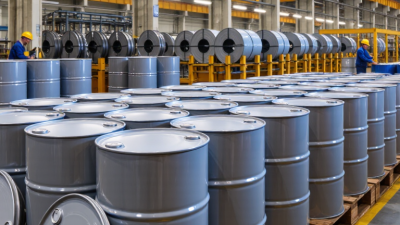
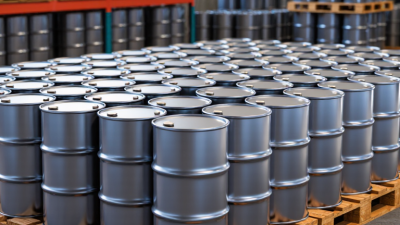
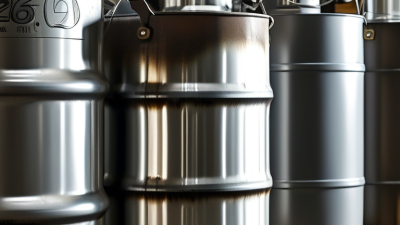
Choosing an iron oil drum manufacturer is not just a matter of comparing prices. Global buyers also need dependable specifications, clear communication, and production capacity suited to their order size. Small details matter. Steel thickness, seam construction, lid fit, and surface coating can affect handling, storage, and service life. A drum may look sturdy in a product photo, yet that image cannot confirm its actual build quality. Request current product data and, where practical, samples or inspection records. Evidence beats assumptions.
This guide introduces ten manufacturers for buyers researching suppliers across international markets. It offers a starting point, not a guarantee that every company will suit every project. Manufacturing capabilities, available sizes, finishes, and customization options can differ, even among companies selling similar drums. Compare specifications carefully. Ask suppliers about quality checks, packaging, lead times, and the documents they can provide for the intended market. Confirm details directly before placing an order, since product listings and business information may change. Not every detail is easy to verify. That is worth remembering. A useful shortlist should help buyers ask sharper questions, not replace their own technical review. The best choice depends on the drum’s intended use, delivery requirements, budget, and the supplier’s ability to meet agreed specifications consistently.
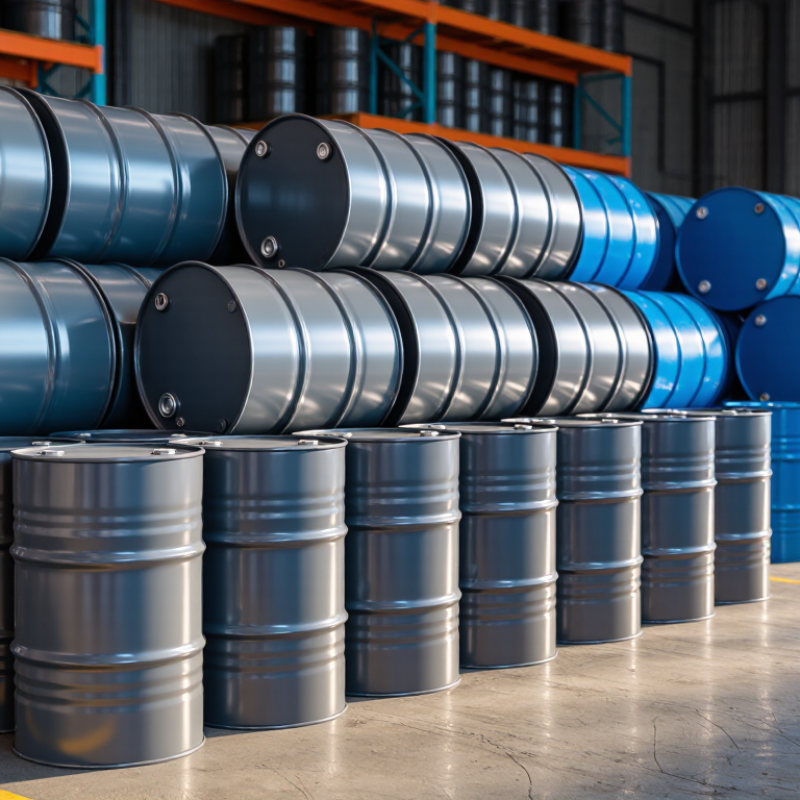
Iron oil drums are usually made from formed steel, not pure iron. A common industrial format holds about 200 liters, though dimensions and capacities vary. Their rigid walls protect oils and other liquid materials during storage and transport. Manufacturers, maintenance workshops, farms, and construction sites use them to manage lubricants, hydraulic fluids, and process oils. A removable lid or sealed closure helps limit leaks and contamination. Details matter.
Steel’s recycling potential is useful, but it does not guarantee every drum is recovered. APEAL’s 2022 data reported an 80.5% recycling rate for steel packaging in Europe; the figure covers packaging broadly, not oil drums alone. The US EPA’s 2018 materials report estimated a 73.8% recycling rate for steel packaging in the United States. These figures use different regions and reporting methods, so they should not be compared as a direct performance test for drums. In daily operations, dents, residue, and unclear labeling can complicate handling and reuse. Not always. A clean, traceable drum is easier to inspect, move, and route through an appropriate recovery stream.

Often called iron oil drums, these containers are typically formed from low-carbon steel sheet. Production begins with coils cut into blanks of specified widths. Workers roll each blank into a cylinder and join its edges with a welded seam. The weld must remain even; a rough seam can weaken the drum or complicate sealing. Formed ends are then attached, commonly through mechanical seaming. Simple steps. Yet small dimensional variations can affect fit.
Tips: Ask suppliers how they check seam quality, dimensions, and leakage. Confirm drum capacity, sheet thickness, closure style, and interior coating before approving a sample. A coating’s suitability depends on the intended contents and storage conditions.
After assembly, drums may be cleaned and coated to help limit corrosion. Exterior paint is applied after surface preparation, while interior linings require careful curing and inspection. Quality checks can include visual examination, measurement, and leak testing using an appropriate method. Buyers should request documented inspection criteria rather than relying on appearance alone. In practice, production details vary between factories, and I would not assume that one sample represents every batch. Clear specifications and agreed sampling plans make comparisons more reliable.
For global buyers, a drum’s quoted price is only one part of the evaluation. Ask manufacturers to state steel thickness, capacity, closure style, and coating options in writing. Request photos of weld seams and finished interiors, then compare them with a physical sample. Small differences matter. A thin coating or uneven seam can contribute to leaks, corrosion, or costly rework during handling.
Review how each factory controls quality, not only whether it holds certificates. Ask for inspection records covering dimensions, leak checks, coating adhesion, and batch traceability. A reliable supplier should explain its test methods and provide relevant evidence. Check monthly output, lead times, minimum order quantities, and how rejected units are handled. Clarify export packing and loading plans; dented rims can complicate filling operations. Communication is evidence too. Vague answers may signal process gaps, though one imperfect email is not proof.
Tips: Send the same specification sheet to every candidate. Compare sample drums under your own filling and storage conditions. Paper claims need verification. If possible, inspect a production run, not just a showroom sample.
China’s Top 10 Iron Oil Drum Manufacturers for Global Buyers should be compared by production consistency, not catalog claims alone. Check steel thickness, weld quality, lid fit, and the coating’s compatibility with the intended oil. Ask how each factory controls leaks and checks drum dimensions. Details matter. A sample drum should have smooth seams, an even finish, and closures that fasten without excessive force.
Tips: Request a recent inspection report and a small production sample. Confirm capacity, packaging, pallet layout, and shipping terms in writing. Ask whether the manufacturer can provide material and coating details for your specific application. A clear answer is more useful than a broad promise.
Before placing a large order, discuss inspection criteria and acceptable defect limits. Verify that documents match the actual product and production batch. A sample can look excellent yet reveal little about long-term consistency; one inspection is not proof. Also compare total landed cost, including packing and freight, rather than choosing on unit price alone. Minor details can be missed, so keep your own checklist.
Standard steel oil drums are commonly specified by nominal capacity. The chart below compares widely used iron drum sizes with their approximate equivalent capacity in US gallons, helping global buyers evaluate packaging requirements, filling volumes, and logistics options.
Capacities are based on common nominal steel drum sizes. Liter-to-gallon conversions use 1 US gallon = 3.785 liters. Actual usable filling volume may vary according to drum design, closure type, safety headspace, and applicable transport regulations.
When buyers compare the top ten iron oil drum manufacturers, verification should begin on the factory floor, not in a brochure. Request a current business license, production address, ownership details, and export references for similar steel drums. A video tour is useful, but an independent audit is stronger. Check whether the plant controls steel coils, welding, cleaning, coating, and final inspection in-house.
Quality evidence must match the actual drum. Ask for steel grade certificates, wall-thickness records, dimensional drawings, and batch traceability. Inspect seam welds, bung threads, gasket fit, internal coating, and stacking rings. A water-leak test and drop test can reveal weak seams. Confirm applicable ISO quality systems and destination-market packaging or transport rules. Test reports should show dates, methods, sample numbers, and laboratory identity. Generic certificates deserve questions. Paperwork can mislead.
Export capability is more than a low quotation. Review pallet design, container loading photos, moisture protection, marking accuracy, and shipping documents. Ask for recent bills of lading with sensitive details removed. Confirm production lead time, inspection access, claims handling, and replacement procedures in writing. Small gaps matter. A polished sample may hide inconsistent mass production. Approve a pilot order and inspect it before scaling. This costs more initially, yet it exposes assumptions that spreadsheets miss.
| No. | Verification Dimension | Buyer Benchmark or Relevant Fact | Documents or Evidence to Request | Acceptance Check |
|---|---|---|---|---|
| 1 | Drum Type and Capacity | Confirm whether the product is a tight-head drum, open-head drum, or another steel container. A common industrial specification is approximately 200–210 L nominal capacity, but actual fill volume must be defined in the purchase contract. | Technical drawing, dimensional tolerance sheet, product specification, and approved sample. | Compare diameter, height, nominal capacity, usable capacity, and pallet loading plan with the approved drawing. |
| 2 | Steel Material and Thickness | Steel oil drums are generally manufactured from low-carbon steel. Thickness should be selected according to product density, stacking height, handling method, and applicable dangerous-goods requirements; it should not be accepted solely on a verbal specification. | Material certificate, coil or sheet traceability record, thickness report, and mechanical-property data where applicable. | Measure multiple points on the body, top, bottom, and chimes using calibrated equipment and compare results with the agreed tolerance. |
| 3 | Closure and Gasket System | Closures may include threaded plugs, flanges, bolted rings, and elastomeric gaskets. Gasket material must be compatible with the oil, chemical, temperature range, and storage period. | Closure drawing, torque specification, gasket material declaration, compatibility statement, and sample closure test record. | Check seal integrity after tightening, opening, reclosing, vibration, and temperature exposure when required by the application. |
| 4 | Internal and External Coating | Interior coatings such as epoxy-phenolic systems may be used to improve chemical resistance. Exterior protection may include paint, varnish, or zinc-based treatment. Coating selection must match the oil type and storage environment. | Coating technical data sheet, dry-film-thickness report, adhesion results, curing record, and corrosion-resistance test report if specified. | Inspect coverage, pinholes, adhesion, curing, color consistency, and visible corrosion after handling simulation. |
| 5 | UN Dangerous-Goods Approval | For regulated hazardous materials, common steel-drum packaging codes include UN 1A1 for non-removable-head drums and UN 1A2 for removable-head drums. Approval depends on the packaging design, performance level, and intended substance. | Valid UN packaging certificate, test report, approval number, marking photograph, and scope showing the permitted packaging group. | Verify the certificate with the issuing authority or accredited test body and confirm that the marking matches the supplied drum. |
| 6 | Performance and Leak Testing | Depending on the cargo and certification route, testing can include drop, leakproofness, hydrostatic pressure, stacking, and lifting-related checks. The exact test level is determined by the applicable dangerous-goods rules and packaging group. | Laboratory test reports, batch inspection records, leak-test procedure, calibration certificates, and corrective-action records. | Confirm that test methods, sample quantities, acceptance criteria, and laboratory accreditation are clearly identified. |
| 7 | Quality Management System | ISO 9001 certification can demonstrate that a quality-management system has been audited against the standard, but it does not automatically prove that every drum meets a buyer's technical requirements. | Current ISO 9001 certificate, certification scope, issuing certification body, audit status, and documented inspection plan. | Check certificate validity, scope, site address, expiry date, and consistency with the actual manufacturing location. |
| 8 | Traceability and Production Control | Reliable production control should connect raw steel, coating batch, forming line, closure components, inspection results, and finished-drum lot numbers. | Batch coding procedure, production flow chart, incoming inspection records, final inspection report, and sample retention policy. | Select a finished drum and trace it backward to raw-material certificates and forward to shipment documentation. |
| 9 | Export Documentation | A typical international shipment may require a commercial invoice, packing list, bill of lading, certificate of origin where requested, product specification, and safety documentation for the cargo. | Sample shipping document set, HS-code proposal, certificate-of-origin process, export packing specification, and cargo safety data where applicable. | Check consistency of product description, quantity, net and gross weight, packaging marks, consignee details, and customs information. |
| 10 | International Logistics Capability | The shipping method depends on the cargo classification, destination, container arrangement, and contract terms. IMDG requirements apply to regulated dangerous goods transported by sea; Incoterms® 2020 define delivery responsibilities but do not replace product compliance. | Recent export references with customer details redacted, container-loading plan, Incoterms quotation, freight-forwarder contact, and dangerous-goods handling procedure. | Verify production lead time, monthly capacity, loading efficiency, packaging protection, port experience, and ability to provide pre-shipment inspection. |
Note: Requirements for steel drums vary according to the contained product, destination market, transport mode, and dangerous-goods classification. Buyers should confirm the applicable national and international regulations before placing an order.