2026 Top Iron Drum Suppliers for Global Buyers?
Global buyers entering 2026 need more than a supplier list. They need evidence.
An iron drum is commonly traded as a steel drum, with 200-litre and 208-litre formats widely used for industrial liquids, powders, and solid materials. The World Steel Association reported global crude steel production of about 1.88 billion tonnes in 2024. That figure highlights the scale of the raw-material base, but it does not guarantee consistent drum quality. Manufacturing discipline still matters.
The OECD Steel Outlook 2025 points to continuing pressure on steel demand, capacity, energy costs, and supply-chain resilience. These pressures can affect quotations, lead times, and coating availability in 2026. Smithers’ research on global metal packaging also emphasizes material efficiency, recycling, and protective coatings as important market factors. Buyers should therefore compare more than unit prices. Inspect wall thickness, closure design, weld quality, internal lacquer, surface treatment, pallet loading, and documented testing. A sample drum should survive handling without sharp seams, distortion, or coating damage. Small details become expensive at container scale.
This guide evaluates leading iron drum suppliers through practical procurement criteria. It considers production capability, export experience, certifications, customization, quality control, and after-sales communication. Supplier rankings remain imperfect. Regional data can be incomplete, and marketing claims may exceed factory evidence. That is why independent audits, batch samples, and current test reports deserve greater weight than impressive websites. A reliable supplier should explain limitations clearly, not merely promise the lowest price.
What Are Iron Drums and How Are They Used Globally?
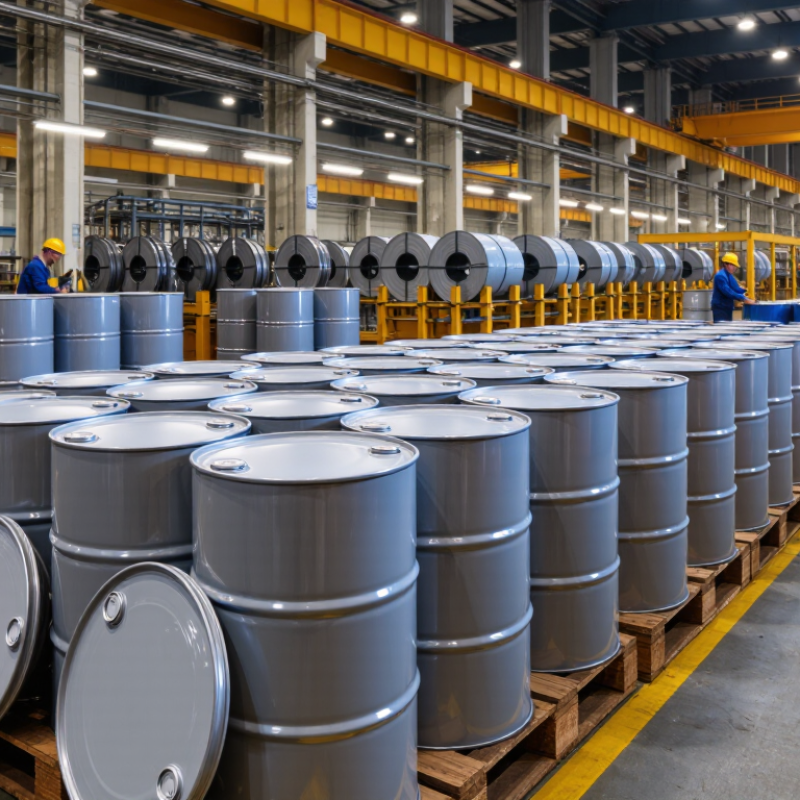
Iron drums are rigid cylindrical containers made mainly from steel, not pure iron. Their welded bodies resist dents, stacking pressure, and rough handling. Common sizes range from small pails to large industrial barrels. Many include removable lids, threaded closures, or clamp rings.
Across global supply chains, these drums carry lubricants, coatings, detergents, food ingredients, and dry powders. Factories value their strength during warehouse storage and truck transport. Ports often move them on pallets, where stable stacking reduces shifting. Interior linings help protect sensitive contents from corrosion or material contact. The correct lining depends on the product.
Practical purchasing starts with wall thickness, closure design, coating quality, and verified capacity. Inspectors should check seams, lid fit, rust marks, and dents before loading. A drum can look strong yet fail around its closure. That detail is easy to miss. Suppliers should provide material data, test records, and handling guidance for the destination market. Requirements differ by region, especially for labeling, recycling, and transport documentation. Buyers should also confirm whether drums are new, reconditioned, or reused. Reused containers may lower costs, but their previous contents and cleaning history matter. My own view is cautious: the cheapest drum is rarely the most reliable choice. A small saving can create larger storage problems later.
Which Standards Define Reliable Iron Drum Quality?
Reliable iron drum quality begins with traceable steel, not a glossy exterior. The World Steel Association reported 1.89 billion tonnes of crude steel production in 2023. That scale makes material traceability essential for global buyers. Ask for heat numbers, steel grade, coating details, and production records. ISO 15750 defines key requirements for steel drum dimensions, closures, and performance. A drum should sit evenly on a flat floor, without rocking or distorted chimes.
Testing must reflect real warehouse conditions. ISO 16106 covers performance-based packaging systems, while UN packaging recommendations address drop, leakproofness, and stacking tests for regulated transport. Even non-regulated products benefit from these controls. Check seam quality, lid-gasket compression, closure torque, internal coating continuity, and empty-drum weight. A small weight variation can reveal inconsistent steel thickness. It is not proof by itself, though.
Practical inspection still matters. Sample drums from different production hours, then repeat the checks after temperature and humidity exposure. A coating may look sound yet fail near the bottom seam. Certificates help, but certificates alone are not evidence. Buyers should request recent laboratory reports, calibrated equipment records, and photographs linked to batch numbers. ISO standards improve consistency, but they do not remove supplier risk. Some inspections remain subjective, especially when visual defects are minor. That weakness deserves documented acceptance limits and independent review.
How to Evaluate Iron Drum Suppliers in 2026
In 2026, evaluating an iron drum supplier requires more than comparing unit prices. Start with the drum’s intended use, capacity, wall thickness, closure type, and surface treatment. Ask for current technical drawings and a sample from normal production, not a specially prepared piece. Check seams, lid fit, weld uniformity, and interior coating under bright light. Small defects often become costly during filling, stacking, or ocean transport. Reliable suppliers should provide batch numbers, material certificates, inspection records, and clear tolerances. Their answers should match the documents. Vague promises are a warning.
Supplier audits should examine production controls, calibration practices, worker training, and packaging methods. Request evidence of leakage, coating adhesion, and stacking tests when relevant to your application. Independent laboratory reports can strengthen confidence, but verify the test date, sample identity, and standard used. Also review export experience, lead times, spare closures, and communication during a trial order. A low quote may hide inconsistent dimensions or weak after-sales support. Sustainability claims need measurable data, such as recycled content or reduced packaging, rather than broad language. No checklist is perfect. I would still keep a risk log and review failures after each shipment. One overlooked detail can matter more than a polished factory presentation.
What Manufacturing Regions Offer the Best Sourcing Options?
For global buyers in 2026, the best iron drum sourcing region depends on volume, coating needs, and delivery distance. China remains strong for large orders, automated production, and broad size selections. Its coastal factories often provide export packaging, stack testing, and custom closures. India offers competitive pricing and growing expertise in heavy-duty industrial drums. Buyers should inspect surface finish carefully, especially after humid sea transport.
Turkey can suit European and Middle Eastern buyers because shorter routes may reduce transit time. Vietnam is becoming attractive for buyers seeking diversified supply chains and responsive medium-volume production. Regional steel quality differs, though. A lower quoted price can hide thicker weld requirements, inconsistent lids, or weaker internal linings. No region wins every order. That assumption needs challenging.
Tips:
Request recent batch samples, not showroom pieces. Check drum weight, seam strength, coating adhesion, and leak-test records. Ask for factory production photos with visible dates. Confirm pallet dimensions before booking freight. Independent inspections add cost, but they can reveal defects before containers leave port. Also review certificates against the exact production site, since documents may be outdated or incomplete. A practical comparison should include steel origin, minimum order quantity, lead time, port access, and after-sales response.
How Should Global Buyers Compare Prices, MOQ, and Delivery?
2026 Top Iron Drum Suppliers for Global Buyers?
How Should Global Buyers Compare Prices, MOQ, and Delivery?
Comparing iron drum suppliers requires more than checking the unit price. Confirm the drum capacity, steel thickness, coating, closure type, and tested load strength. A 210-liter drum with thinner steel may look cheaper, but it can deform during stacking. Ask for recent inspection records, product drawings, and batch photographs. These details reveal whether the quotation matches the actual product.
Calculate the landed cost, not just the factory price. Include inland transport, export packing, ocean freight, insurance, duties, and destination handling. Request prices under the same trade terms. Otherwise, comparison becomes unreliable. A supplier offering a 1,000-drum MOQ may reduce the unit price, while creating expensive storage problems. Smaller trial orders can expose defects earlier. They may also carry higher shipping costs.
Delivery needs equal attention. Ask for production time, loading dates, port options, and backup plans for delays. A realistic schedule is more valuable than a rushed promise. Require written confirmation for the inspection date and shipment documents. In practice, buyers sometimes focus too heavily on price and ignore pallet quality or rust protection. That mistake can appear only after arrival. Even experienced teams miss details when specifications change late. Recheck every revision before payment.
2026 Top Iron Drum Suppliers for Global Buyers
How should global buyers compare prices, MOQ, and delivery?
Indicative 2026 procurement benchmarks for new 210-liter steel drums. Prices represent estimated USD per drum for export orders, MOQ is measured in drums, and delivery is the typical production lead time in days after order confirmation. Actual quotations may vary with coating, thickness, closures, certification, and shipping terms.