10 Tips for Buying Empty Iron Drums in Bulk

Buying an empty iron drum in bulk looks simple until the first shipment arrives.
A low price may hide thin steel, weak seams, damaged bungs, or expensive freight.
Small details matter.

Packaging consultant Paul T. Johnson, who has worked with industrial steel containers for over two decades, says, “A drum is only a bargain when its condition, closure, and delivery cost match the buyer’s real needs.” His advice reflects a common purchasing mistake: focusing on unit price before checking performance. A clean 55-gallon drum with a secure lid can be suitable for storage, shipping, or manufacturing use. However, the correct choice depends on capacity, steel thickness, coating, closure style, and required certifications.

This guide, “10 Tips for Buying Empty Iron Drums in Bulk,” follows the checks experienced buyers use before approving an order. It examines supplier credibility, sample inspections, rust protection, pallet arrangements, minimum quantities, and freight calculations. You will also see why photographs are not enough. A drum may look sound outside while showing dents, pitting, or residue inside. That detail is easy to miss.

Some recommendations may feel slower than expected. They are. A written specification can prevent hundreds of unusable drums from reaching your warehouse. Ask for production details, inspection records, and clear delivery terms. Requirements also vary by region and application, so confirm current safety and transport standards with qualified professionals. No single checklist replaces careful judgment. Yet a disciplined review can reduce waste, unexpected costs, and avoidable purchasing errors.
10 Tips for Buying Empty Iron Drums in Bulk

Define Capacity and Dimensions: 55-Gallon (208-L) Drums Under ISO 15750

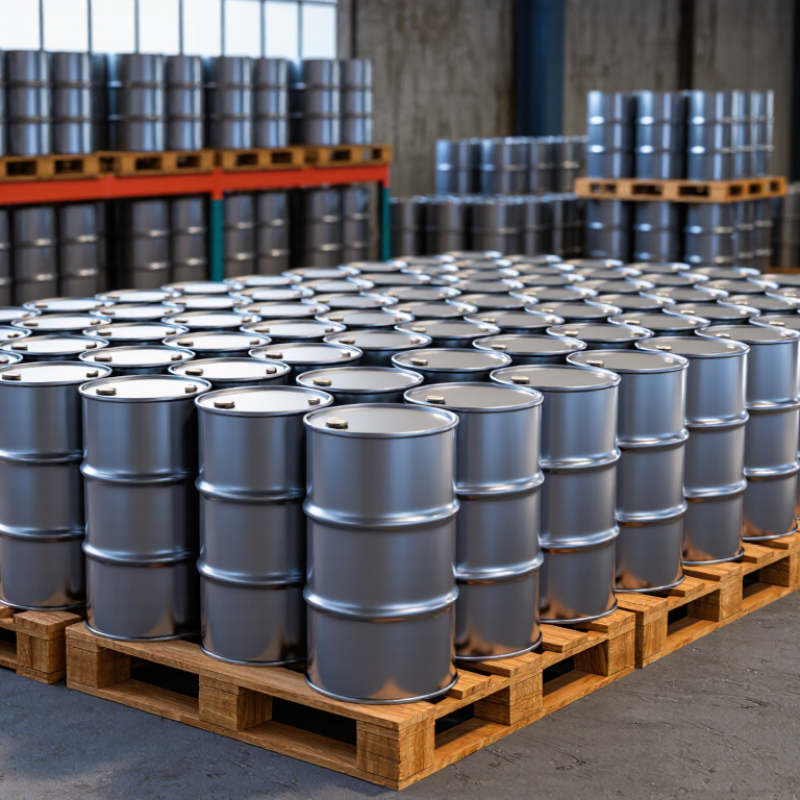
When buying empty iron drums in bulk, define the size before comparing prices. A 55-gallon drum usually means 208 liters, but nominal capacity is not usable capacity. Leave headspace for safe handling and storage. Ask for the exact internal volume, external dimensions, and dimensional tolerances.

ISO 15750 provides a useful reference for 208-liter steel drums. However, compliance should be verified through drawings, inspection records, and supplier documentation. Check the drum height, body diameter, top and bottom profiles, wall thickness, and closure type. Small dimensional differences can affect pallet loading, warehouse clearance, and filling equipment.

Measure the receiving area first. A drum that fits on one pallet may not fit through a narrow doorway. Confirm whether the stated dimensions include the rim, bungs, or protective rings. Request clean, dry interiors and corrosion-resistant surfaces when storage conditions require them. Do not rely on catalog wording alone. That assumption is weak.

A practical bulk checklist should include sample approval, production consistency, closure torque, coating details, and packaging protection. Inspect several samples from different pallets, not just one drum.

I would also record photographs and measurements during receiving. It takes extra time, but it can reveal dents or height variation early. Specifications look precise; real shipments sometimes are not.

Verify Steel Grade and Thickness Against EN 10130 or ASTM A1008

10 Tips for Buying Empty Iron Drums in Bulk

Before approving a bulk order, confirm the drum steel grade and thickness in writing. EN 10130 covers cold-rolled low-carbon steel for forming. ASTM A1008/A1008M covers carbon steel sheet and strip specifications. Ask which standard applies to the supplied material, then check the exact grade, not just the standard name. Request a mill test certificate showing heat number, chemical composition, yield strength, and tensile strength. A certificate alone is not enough.

Tip 1: Measure sample drums with a calibrated micrometer. Check the body, lid, base, and seam areas separately. Coatings can affect readings. Compare results with the stated nominal thickness and permitted tolerance.

Tip 2: Match steel thickness to real handling conditions. Thin walls may reduce cost, but repeated stacking, forklift movement, and temperature changes can expose weak points. A thicker wall is not automatically better if the forming quality is poor.

Tip 3: Inspect ten or more drums from different pallets. Look for dents, uneven seams, sharp edges, pinholes, and poor closures. Ask for traceability from each batch to its steel certificate.

I have seen purchasing teams trust one attractive sample too quickly. That approach feels efficient, but it can miss production variation.

Keep inspection records, photographs, and rejected sample details. If the supplier cannot explain a grade mismatch, pause the order and obtain independent testing.

Match UN Ratings: 1A1 and 1A2 Drums Under UN 6.1.5 Drop Tests

When buying empty iron drums in bulk, match the UN rating to the required performance level. A 1A1 drum has a non-removable head, while a 1A2 drum has a removable head. This difference affects filling access, closure control, and leak resistance. The UN Recommendations on the Transport of Dangerous Goods, Model Regulations, 23rd revised edition, specifies drop-test heights of 1.8 metres for Packing Group I, 1.2 metres for Group II, and 0.8 metres for Group III. These tests fall under UN 6.1.5 performance testing.

Tip 1: Request the UN certificate, test report, and production date for every drum design. Check that the report identifies the exact 1A1 or 1A2 construction. A certificate for a similar drum is not enough. Inspect sample drums for dents, sharp seams, distorted rims, and damaged gaskets. The UN Model Regulations also require testing with the intended closure system, so replacing a lid or plug can change performance.

Tip 2: Confirm closure torque and gasket material before placing a large order. ISO 16106:2020, Packaging—Transport packages for dangerous goods, supports documented quality controls and traceability. Record batch numbers, steel thickness, internal coating, and supplier inspection results. A heavier drum is not automatically safer. I have seen attractive drums with weak closures. That is easy to miss. Allow a small pilot order, repeat the drop-test documentation review, and question any report lacking test conditions, sample identity, or laboratory details.

10 Tips for Buying Empty Iron Drums in Bulk - Match UN Ratings: 1A1 and 1A2 Drums Under UN 6.1.5 Drop Tests
Tip Buying Dimension Practical Requirement Relevant Technical Data Bulk-Buying Check
1 Choose the correct drum design Select a 1A1 drum for a non-removable head or a 1A2 drum for a removable head. 1A1 drums have a permanently closed top with openings for filling or discharge. 1A2 drums have a removable cover secured by a closing ring or another approved closure system. Confirm that the head style matches the filling, emptying, cleaning, and inspection process.
2 Match the UN performance level Do not treat “1A1” or “1A2” alone as the complete UN approval. Request the full UN specification marking and ensure its performance level is suitable for the intended substance. UN packaging performance levels are commonly identified as X for Packing Groups I, II, and III; Y for Packing Groups II and III; or Z for Packing Group III. Compare the marking with the substance’s required Packing Group and transport regulations.
3 Verify the UN 6.1.5 drop-test requirement Ask for test evidence showing that the approved drum design passed the applicable drop test under the UN Recommendations on the Transport of Dangerous Goods, Manual of Tests and Criteria, Chapter 6.1. For the standard drop-test heights, the minimum height is generally 1.8 m for Packing Group I, 1.2 m for Packing Group II, and 0.8 m for Packing Group III. Check the test report, packaging specification, test substance or equivalent, conditioning, and failure criteria.
4 Check the complete UN marking Inspect a sample drum and verify that the permanent marking is legible, durable, and consistent with the supplied documentation. A typical marking identifies the UN packaging symbol, packaging type, performance level, specific gravity or mass information where applicable, hydrostatic test pressure for liquids where applicable, manufacturer or approval reference, and production year. Reject drums with missing, altered, incomplete, or inconsistent markings.
5 Confirm capacity and dimensions Specify nominal capacity, maximum permitted filling volume, external dimensions, drum diameter, height, and pallet configuration before placing a bulk order. Common steel drum capacities include approximately 55 US gallons / 208 litres, but actual nominal and working capacities vary by design and regulation. Confirm that the usable volume leaves the legally required ullage or expansion space for the product.
6 Evaluate steel construction Request the steel grade, body thickness, head thickness, seam construction, surface treatment, and corrosion-protection details. Drum performance depends on the complete design, including the body, heads, seams, chimes, closures, and lining—not on steel thickness alone. Use a written thickness tolerance and visual acceptance standard for incoming inspection.
7 Select the correct internal finish Choose unlined steel, lacquered steel, or another compatible internal finish according to the product’s chemical properties. Compatibility should consider corrosion, permeation, contamination, temperature, storage duration, and interaction between the product and the lining or closure gasket. Obtain compatibility data and conduct a product-specific trial when the contents are corrosive, reactive, or high-purity.
8 Inspect closures and gasket materials Specify bung size, plug and flange materials, closing-ring type, bolt or lever arrangement, torque requirements, and gasket material. Closure components must be suitable for the contents and must maintain leak resistance during handling, transport, vibration, and temperature changes. Request closure instructions, gasket specifications, and leak-test criteria for the delivered batch.
9 Control empty-drum condition and cleanliness Define whether the drums are new, reconditioned, washed, dried, internally inspected, or supplied with protective caps and packaging. Empty drums can still contain dust, moisture, oil residue, foreign matter, or odors that may affect the next product. Set acceptance limits for dents, rust, coating damage, contamination, residual moisture, and damaged closures.
10 Plan palletization, storage, and traceability Agree on pallet pattern, stacking limits, protective separators, warehouse conditions, batch identification, and delivery inspection procedures. Steel drums should be protected from excessive moisture, standing water, impact, and improper stacking that could deform the body or closures. Keep the UN test documentation, production records, inspection results, and delivery batch references together for traceability.
Important: UN approval is design- and specification-specific. A drum marked 1A1 or 1A2 is not automatically suitable for every dangerous good. Confirm the full UN marking, Packing Group, substance compatibility, closure system, and applicable national or international transport regulations before purchase and use.

Calculate Bulk Costs Using MOQ, Tare Weight, Pallet Counts, and Freight

Bulk pricing starts with the real unit cost, not the catalog price. Ask for MOQ, capacity, steel gauge, tare weight, and pallet pattern. For example, 1,000 drums at $11.80 cost $11,800 before logistics. If each drum weighs 20 kilograms, steel weight reaches 20,000 kilograms. Add 13 pallets at 80 drums each. Include pallet tare, often 20 to 30 kilograms, but verify it. The World Steel Association reported 1,888.2 million tonnes of crude steel production in 2023. That scale does not guarantee your quotation.

Order quantity 1,000 drums
Steel weight 20,000 kilograms

Calculate freight from both weight and space. Do not confuse water capacity with shipping weight. Request the supplier’s loading diagram, pallet height, stack limits, and usable container volume. If 1,000 drums fit on 13 pallets, compare that layout with the carrier’s payload limit. A small dimensional change can require another pallet. That hurts.

Drewry’s World Container Index publishes weekly spot data across eight major routes. It is not a drum quote, but it shows shipping-market direction. Divide ocean freight, handling, and inland delivery by the actual drum count. Then compare the result against a smaller MOQ. A 500-drum order may have a higher unit price, yet lower total cash exposure. My least reliable assumption would be treating every pallet as identical; moisture, stretch wrap, and pallet type can change the final weight. Get certified scale data before approving the purchase.

Audit Supplier Quality Through ISO 9001, Leak Tests, Coatings, and Sampling

Buying empty iron drums in bulk requires more than comparing unit prices. Ask suppliers for current ISO 9001 certificates, audit scope, and recent corrective-action records. A certificate alone proves little. Check whether production controls cover steel thickness, welds, closures, cleaning, and traceability. Request a factory tour or live video inspection. Look for labeled coils, calibrated gauges, protected storage, and workers following written procedures. I once saw an organized workshop fail to separate rejected lids from approved stock. Small details matter.

Leak testing should match the drum design and intended contents. Confirm the test method, pressure, holding time, and acceptance criteria. Ask for batch records, not verbal promises. Sample several drums from different pallets. Inspect seams, chimes, bung threads, and gasket seating. A few clean samples can mislead. Random sampling is stronger when an independent inspector witnesses selection. Keep retained samples, photographs, and lot references for later comparison. If a supplier resists transparent sampling, pause the purchase.

Coatings deserve equal attention. Request the coating type, dry-film thickness targets, curing conditions, adhesion results, and chemical-resistance data. Test interior and exterior surfaces, especially around seams and closures. Salt-spray results may help, but they cannot predict every storage environment. Ask for production samples after curing, then repeat checks after transport simulation. No audit is perfect. Humidity, handling, and rushed inspections can distort results. Build a written approval checklist, define reinspection triggers, and record every exception before accepting the shipment.