How to Choose 51.2V 160Ah LFP Batteries
Choosing 51.2 V 160ah Lfp Batteries is not just a matter of matching voltage and capacity. A 51.2 V, 160 Ah pack stores about 8.19 kWh nominally, but the energy available to your equipment depends on the battery’s usable discharge range and inverter settings. Battery scientist Dr. Shirley Meng’s research offers a useful perspective: cell materials and operating conditions both shape performance. This is a paraphrase, not a verbatim quotation.
Start with the load. Check the inverter’s voltage range, peak power demand, and required continuous current. Then compare the battery’s BMS limits, approved charging profile, and temperature protections. A label saying “160 Ah” does not tell the whole story. Two batteries with the same capacity can differ in usable energy, communications, and warranty coverage.
Look closely.
Ask for cycle-life test conditions, not only a headline cycle count. Confirm whether the pack supports parallel operation with your specific inverter; matching voltage alone is not enough. For a home installation, also check cable size, terminal placement, enclosure rating, and space for safe servicing. If the battery will sit in a cold garage, verify its charging limits at low temperatures. Details matter.
This guide explains how to weigh those specifications against your real daily consumption and backup needs. It also points out a common uncertainty: published ratings may not reflect your installation’s actual conditions. A careful choice starts with the datasheet, but it should end with compatibility confirmation from the battery and inverter manufacturers.
Understanding the Specifications of a 51.2V 160Ah LFP Battery
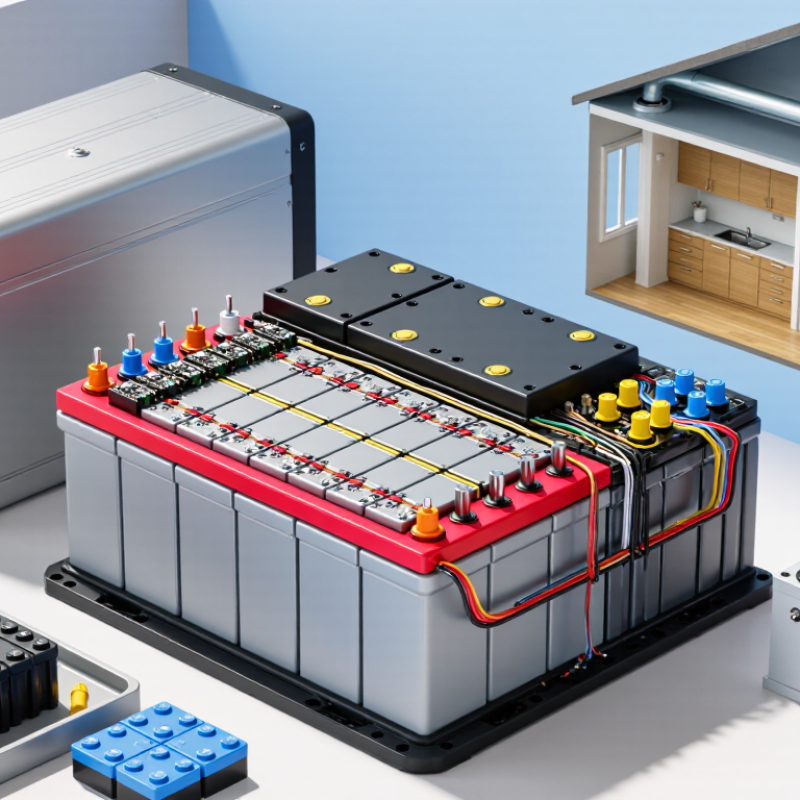
A 51.2V 160Ah LFP battery stores about 8.19kWh of nominal energy: voltage multiplied by amp-hours. The 51.2V rating usually represents sixteen 3.2V cells connected in series. Numbers need context. Usable energy is lower when the battery management system reserves capacity or the inverter consumes power. At an 80% depth of discharge, the battery provides about 6.55kWh before inverter losses. Actual results depend on the product’s operating limits and conditions.
Check continuous charge and discharge current, not just peak current. A 160A discharge rating would equal 1C for a 160Ah battery, but that rating must come from the product’s specifications. Review cycle-life claims alongside their test conditions, including temperature, discharge depth, and current. Also confirm low-temperature charging protection, inverter compatibility, and permitted parallel connections. NREL’s 2024 Annual Technology Baseline uses approximately 85% round-trip efficiency for utility-scale battery-storage modeling; this is a planning assumption, not a guaranteed figure for a household battery. That distinction matters. I would not compare two batteries by capacity alone: a specification without its test conditions leaves important questions unanswered.
How to Choose a 51.2V 160Ah LFP Battery
Understanding the Specifications of a 51.2V 160Ah LFP Battery
A 51.2V, 160Ah battery has a nominal energy capacity of 8.19 kWh (51.2 × 160). The chart shows estimated energy at selected depths of discharge (DoD), calculated from that nominal capacity.
These figures are theoretical estimates; actual usable energy depends on the battery’s BMS limits, temperature, discharge rate, and system losses. A 100% DoD is shown for comparison and is not a recommendation for routine operation.
Checking Compatibility With Your Inverter and Charging System
A 51.2V, 160Ah LFP battery stores about 8.19 kWh nominally. Check that the inverter supports a 48V-class battery bank and accepts the battery’s actual charging-voltage range. The label alone is not enough. A typical 51.2V LFP pack uses 16 cells in series, but charge voltage, cutoff settings, and current limits vary by model. Use the battery’s published limits, and make sure the inverter’s charge settings stay within them. A mismatch can trigger the battery management system and interrupt power.
Check current as carefully as voltage. A 5 kW AC load draws about 98 A from a 51.2V battery before inverter losses; actual DC current will be higher. Compare expected draw with the battery’s continuous discharge rating, BMS limit, cables, fuse, and inverter rating. If solar and grid chargers can run together, check their combined charging current against the battery limit.
Small detail. It matters.
Also verify the communication protocol and firmware requirements if the units use CAN or RS-485; matching connector shapes do not guarantee compatibility. NREL’s 2021 Storage Futures Study used 85% round-trip efficiency as a lithium-ion modeling assumption. That is a system-level estimate, not a guarantee for an individual battery, so leave room for real-world losses when planning usable energy.
Evaluating Safety Features, Certifications, and Battery Quality
When choosing a 51.2V 160Ah LFP battery, treat safety documents as evidence to verify, not decoration. Check whether certifications or test reports cover the exact battery model, rather than only its cells or a similar product. Standards such as IEC 62619 and transport testing such as UN 38.3 address different risks. Confirm the document numbers and issuing laboratory where possible. Requirements can vary by installation and market.
The battery management system should protect against excessive voltage, current, and temperature, and balance cells during use. Ask what happens if the system detects a fault: Does it disconnect output, show an alarm, or both? Check the specified operating temperatures and charging limits against the battery’s planned location. A garage can become surprisingly hot. Protection features cannot compensate for poor wiring or an unsuitable charger.
Battery quality also shows in traceable cell information, clear capacity test conditions, and a warranty with readable exclusions. Inspect the enclosure, terminals, and connection instructions; loose or undersized connections can create heat. Ask whether the battery supports your inverter and any planned parallel setup. I would not judge quality by capacity alone. Paperwork can look complete, yet still leave practical questions unanswered.
Comparing Lifespan, Warranty, Installation, and Total Cost
How to Choose 51.2V 160Ah LFP Batteries
Comparing Lifespan, Warranty, Installation, and Total Cost
A 51.2V, 160Ah battery stores about 8.2 kWh of nominal energy. Usable energy can be lower, so check the stated discharge limit and your inverter’s cutoff settings. Lifespan depends on temperature, charging current, and how deeply the battery is discharged. Ask what test conditions support the cycle-life figure. Numbers need context.
Tips: Compare warranty years, energy throughput, and capacity retention. Check exclusions and claim requirements in writing. A long warranty is not automatically the better value.
Before buying, confirm the battery’s dimensions, weight, terminal type, and communication compatibility with the inverter. Installation costs may include cables, protective devices, mounting hardware, and qualified labor. Request an itemized quote. Then compare total cost per usable kilowatt-hour, not just the purchase price. Local operating temperatures and installation conditions can affect performance, so follow the manufacturer’s instructions. I would leave room in the budget for a mismatch or extra cable; estimates are not always perfect.