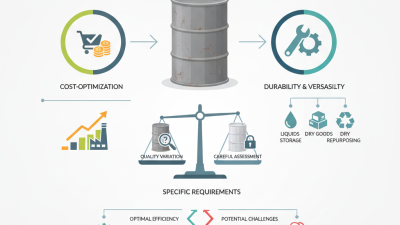
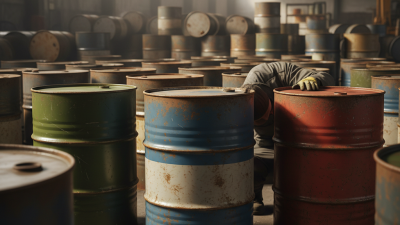
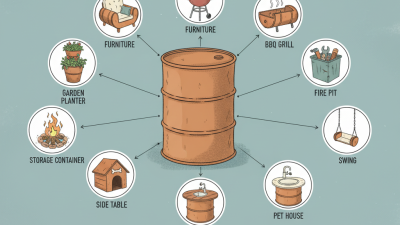
Buying a used iron drum for sale requires more than comparing prices and photographs. Global buyers should examine each drum’s history, condition, capacity, and intended application. A reliable seller should provide clear images of the body, seams, lid, closure ring, and base. Rust around welds or deep dents may indicate hidden weakness. Small surface marks are not always serious. However, unexplained damage deserves caution.
This guide focuses on practical checks that support safer purchasing decisions. Buyers can compare standard capacities, steel thickness, coating condition, and storage requirements. They should also confirm whether the drum is open-head or tight-head. Important details include dimensions, tare weight, stacking limits, and pallet compatibility. Documentation matters too. Ask for inspection records, cleaning information, material specifications, and export paperwork when applicable. Requirements differ between countries and industries, so local regulations should be verified before shipment.
Experience helps, but it does not remove uncertainty. No photograph can reveal every internal defect. A low-cost drum may become expensive after sorting, cleaning, repainting, or transport. That risk is easy to underestimate. Buyers should request samples or arrange an independent inspection for larger orders. Reputable suppliers explain limitations instead of promising perfect condition. They also separate reusable drums from items suitable only for non-sensitive storage or recycling. With careful questions and realistic expectations, international purchasers can identify dependable used iron drums and avoid decisions based only on attractive pricing.
In the 2026 global market, used iron drums appear in several practical forms. The common choices are open-head, tight-head, lined, and galvanized drums. Open-head drums have removable lids and wide openings. They suit solid materials, manual cleaning, and easy visual inspection. Tight-head drums use fixed tops with small bung openings. They reduce spills during routine liquid handling. Lined drums add an internal coating that helps separate contents from the metal surface.
Galvanized drums resist surface corrosion better in humid storage areas. However, damaged zinc can expose the base metal. Reconditioned drums are cleaned, tested, and repainted before resale. Their quality depends on the processor, not the fresh appearance.
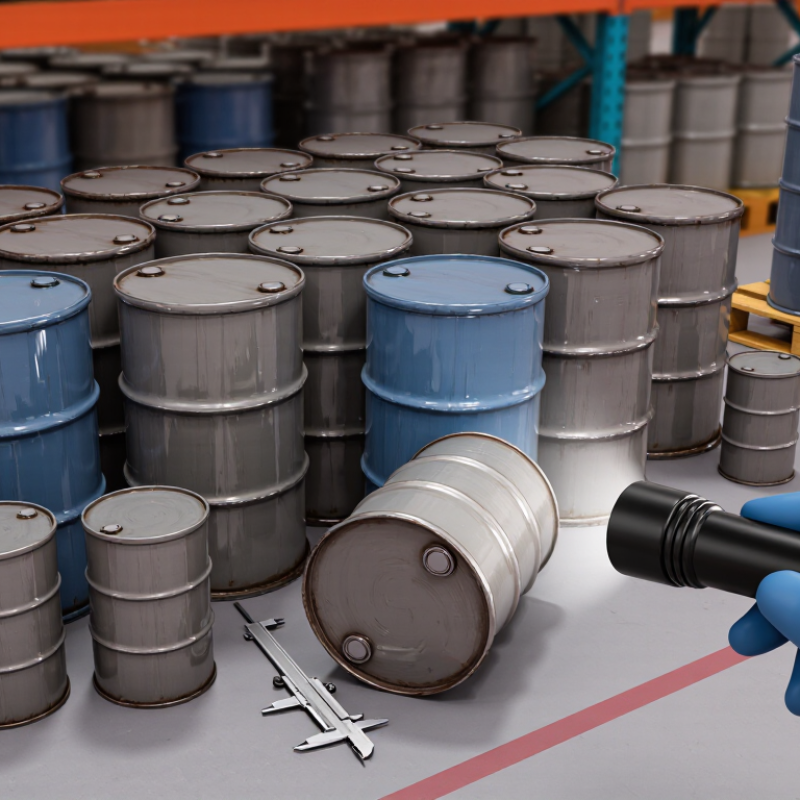
I check the seam, bottom ring, bung threads, and inner coating. A flashlight reveals pinholes and uneven rust. Ask for wall-thickness readings, leak-test records, and recent photographs. Small dents may be harmless, but sharp creases can weaken handling points.
For international buyers, capacity, closure style, stackability, and pallet dimensions affect freight cost. A 200-liter drum may not deliver the same usable volume after lining or internal damage. Confirm whether each drum is empty, cleaned, and documented for lawful reuse.
Do not rely on one inspection image. That is risky. Request random-unit checks from the actual shipment.
I have seen attractive drums fail because their lids fitted poorly. A lower price can hide sorting, cleaning, or port delays. Compare delivered cost, inspection evidence, and intended application before ordering.
2026 Best Used Iron Drum for Sale Guide for Global Buyers
A used iron drum can look sound while hidden corrosion weakens its wall. Inspect it in daylight, not only through listing photographs. Check the rim, seams, base ring, and closure threads for rust, cracks, dents, or fresh paint covering damage. Small dents may be acceptable, but sharp folds can reduce structural strength. Look inside with a lamp. Flaking scale, standing moisture, and a damaged lining deserve careful attention.
Measure wall thickness with an ultrasonic gauge when possible. A qualified inspector should perform this test and record each reading. Ask the seller for manufacturing dates, previous contents, storage conditions, cleaning records, and inspection reports. Missing records do not prove failure, but they increase uncertainty. I once underestimated surface rust on a drum stored near the coast. The underside was much worse than the top.
Remaining service life depends on steel thickness, corrosion rate, handling, climate, and intended use. There is no honest universal lifespan. Compare the lowest thickness reading with the original specification and allow a sensible safety margin. Check whether the drum meets the buyer’s local transport and storage requirements. Do not rely on a seller’s phrase, “good condition.” Request clear photos, independent measurements, and a written condition statement. A low price can become expensive after rejected delivery, repainting, or disposal. If the drum will hold regulated materials, obtain professional compliance advice before purchase.
Practical inspection criteria for used carbon-steel drums before purchase
| Assessment Dimension | What to Check | Acceptable / Preferred Condition | Warning Signs | Impact on Remaining Service Life |
|---|---|---|---|---|
| Drum Type and Capacity | Confirm open-head or tight-head construction, nominal volume, closure type, and dimensions. | Common capacities include 60 L, 120 L, 210 L, and 220 L. The drum type matches the filling, emptying, and handling method. | Mismatched closure, distorted bung openings, missing cover, or capacity different from the purchase specification. | Incorrect configuration can make an otherwise sound drum unsuitable and may reduce practical service life to zero for the intended use. |
| Manufacturing Date and Traceability | Read the stamped or printed date, material code, capacity marking, and previous-use information. | Clear markings, documented ownership history, known previous contents, and consistent inspection records. | Illegible markings, unknown contents, altered identification, or no inspection history. | Unknown history requires conservative classification and may prevent reuse for regulated, food, pharmaceutical, or hazardous materials. |
| External Corrosion | Inspect the shell, bottom chime, top chime, seams, welds, and areas beneath labels or bands. | Light, superficial surface rust that can be removed without measurable pitting or loss of section thickness. | Deep pits, scale, perforation, active rust, corrosion around seams, or corrosion concentrated at the base. | Surface rust may have limited effect; deep pitting or perforation can require immediate rejection or repair. |
| Wall Thickness | Measure several points with a calibrated ultrasonic thickness gauge, especially the bottom, chimes, seams, and corroded areas. | Measured thickness is uniform, free from localized severe loss, and complies with the applicable drum specification and buyer's safety margin. | Localized thin spots, large differences between readings, or thickness below the applicable specification. | Remaining life is governed by the thinnest critical area, not the average wall thickness. |
| Leaks and Liquid Tightness | Check seams, bung areas, cover gasket, welds, and bottom for leakage or dampness. Use a suitable controlled leak test when permitted. | No visible leakage, seepage, staining, or pressure loss during an approved inspection test. | Drips, wet patches, chemical residue, pinholes, cracked welds, or a leaking closure. | A leaking drum should not be used for liquids, hazardous materials, or transport until properly assessed and repaired by an authorized facility. |
| Dents and Deformation | Inspect roundness, sidewalls, top and bottom chimes, cover seating, and stacking alignment. | Minor cosmetic dents with no sharp creases, no seam distortion, and no interference with closures or stacking. | Sharp folds, bulging, severe ovality, crushed chimes, unstable standing, or a cover that cannot seat correctly. | Structural deformation can sharply reduce load-bearing and stacking capability even when corrosion is minimal. |
| Seams, Welds, and Chimes | Examine longitudinal seams, circumferential seams, welds, and the rolled top and bottom edges. | Continuous, intact seams without cracks, separation, buckling, sharp edges, or corrosion penetration. | Cracks, open seams, dented chimes, weld porosity, sharp metal, or heavy corrosion along a seam. | Damage in a seam or chime is a critical defect because it can compromise containment and handling safety. |
| Closures, Bungs, and Gaskets | Check threads, plugs, flanges, cover clamps, bolts, seals, and gasket elasticity. | Closures operate smoothly, threads are undamaged, seals are compatible with the contents, and replacement parts are available. | Cross-threading, missing parts, hardened or cracked gaskets, damaged threads, or incompatible sealing material. | Closures are replaceable in some cases, but damaged bung necks or cover flanges may make the drum unsuitable. |
| Interior Condition | Inspect for residue, odor, rust, pitting, liner damage, moisture, foreign matter, and previous contents. | Clean, dry, odor-free interior with no incompatible residue or active corrosion; liner remains continuous where fitted. | Unknown chemical residue, persistent odor, flaking liner, internal rust scale, contamination, or trapped liquid. | Interior contamination can make reuse unsafe regardless of external appearance and may require specialist cleaning or rejection. |
| Compatibility With Contents | Compare steel grade, coating or liner, gasket material, and previous contents with the new product's chemical properties. | Compatibility is confirmed for the specific liquid, powder, or solid, including temperature and concentration conditions. | Unknown previous contents, aggressive chemicals, solvent attack, liner swelling, or galvanic-corrosion risk. | Chemical incompatibility can cause rapid corrosion, seal failure, contamination, or dangerous reactions. |
| Coating or Lining | Check internal and external paint, lacquer, galvanizing, or polymer lining for adhesion and continuity. | Coating is firmly bonded, free of blistering and peeling, and suitable for the intended contents and environment. | Blisters, delamination, exposed steel, pinholes, cracking, or coating chemically attacked by the previous contents. | Coating defects accelerate corrosion and may contaminate contents; repair quality must be verified before reuse. |
| Stacking and Handling Features | Check chime geometry, pallet compatibility, forklift handling, rolling rings, and stability on a level surface. | Drum stands upright, rolls normally when designed to roll, stacks evenly, and shows no unstable deformation. | Rocking, collapsed chimes, uneven base, damaged rolling rings, or unsafe stacking alignment. | Handling damage increases accident risk and may limit the drum to non-stackable, non-transport use. |
| Pressure and Venting Suitability | Determine whether the drum is designed for atmospheric service or approved pressure-related use. Check vent requirements. | Use remains within the original design limits, with suitable venting and no unauthorized modification. | Bulging, vacuum collapse, blocked vent, unauthorized pressure testing, or use as a pressurized vessel. | Most standard drums are not pressure vessels; pressure or vacuum misuse can cause sudden failure. |
| Cleaning and Reconditioning Quality | Review the cleaning method, drying process, closure replacement, repainting, and inspection report. | Cleaning is documented, residue testing is appropriate to the intended use, and repairs do not conceal defects. | Strong odor, oily film, concealed rust under fresh paint, wet interior, or undocumented repairs. | High-quality reconditioning can extend useful life; cosmetic repainting alone does not restore structural strength. |
| Regulatory and Transport Markings | Verify required markings, packaging approval, closure instructions, inspection validity, and destination-country requirements. | Markings are legible and applicable to the intended product, route, and transport mode. | Expired or irrelevant approval, missing markings, unreadable codes, or use outside the certified application. | A structurally sound drum may still be legally unsuitable for regulated transport or export. |
| Inspection and Testing Evidence | Request dated photographs, thickness readings, leak-test records, cleaning records, and a defect register. | Records identify each drum or batch, test method, inspection date, findings, and disposition. | Only general photographs, no measurements, no test dates, or inconsistent quantities and descriptions. | Poor evidence increases uncertainty and should be reflected in the purchase price, warranty, and acceptance criteria. |
| Storage and Environmental History | Find out whether drums were stored indoors or outdoors, exposed to salt spray, standing water, sunlight, or freezing conditions. | Stored upright, dry, ventilated, protected from standing water, and separated from corrosive materials. | Water trapped under drums, marine exposure, heavy condensation, soil contact, or prolonged outdoor storage. | Poor storage commonly causes hidden base corrosion and can reduce service life faster than chronological age alone. |
| Grade | Typical Condition | Suitable Applications | Indicative Remaining Service Life* | Buyer Action |
|---|---|---|---|---|
| A — Excellent | Minimal cosmetic wear, no meaningful pitting, sound closures, clean interior, and complete records. | Suitable for demanding reuse when chemical compatibility and regulatory requirements are confirmed. | Approximately 5–10 years or more under suitable storage and normal handling. | Perform representative thickness, closure, and leak checks before accepting the lot. |
| B — Good | Light rust or minor dents, with intact seams, stable base, and functional closures. | General industrial storage and handling where appearance is not critical. | Approximately 3–7 years, depending on corrosion rate, contents, and environment. | Buy after sampling and confirm that dents do not affect stacking or sealing. |
| C — Serviceable | Visible wear, moderate surface corrosion, or cosmetic deformation, but no leak or critical structural defect. | Non-critical, non-hazardous, short-term, or secondary containment applications after approval. | Approximately 1–3 years, subject to frequent inspection and controlled use. | Use only with a documented risk assessment and a lower purchase price. |
| D — Reject / Scrap | Perforation, active leakage, severe pitting, cracked seams, bulging, unstable base, unknown hazardous residue, or failed testing. | Scrap recycling or specialist reconditioning only; not suitable for direct reuse. | No dependable remaining service life for the intended application. | Reject the drum unless a qualified facility confirms a documented repair and retest. |
| Checkpoint | Recommended Acceptance Requirement | Status |
|---|---|---|
| Sample inspection | Inspect a representative sample from every production or storage batch, including the oldest and most worn units. | Pass / Hold / Fail |
| Photographic evidence | Obtain clear images of the top, bottom, chimes, seams, closures, interior, markings, and corrosion areas. | Pass / Hold / Fail |
| Thickness verification | Record calibrated readings at multiple high-risk locations and compare them with the applicable specification. | Pass / Hold / Fail |
| Leak and closure check | Confirm no leakage and verify that covers, bungs, threads, gaskets, and clamps function correctly. | Pass / Hold / Fail |
| Content history | Require a declaration of previous contents and reject drums with unknown or incompatible hazardous residue. | Pass / Hold / Fail |
| Regulatory suitability | Confirm destination-country, product, and transport requirements before ordering. | Pass / Hold / Fail |
| Shipping protection | Specify dry covered transport, protection from salt water, secure stacking, and delivery inspection procedures. | Pass / Hold / Fail |
*Remaining service-life figures are indicative planning ranges, not a guarantee. Actual life depends on steel thickness, corrosion rate, contents, temperature, pressure or vacuum exposure, handling frequency, storage conditions, repairs, and applicable local regulations. Standard used steel drums should never be treated as pressure vessels unless specifically designed, certified, and approved for that service.
When comparing a used iron drum for sale, capacity is only the beginning.
Common sizes range from 60 to 220 liters, but internal volume can vary with the design. Measure the height, diameter, and opening before placing an order. A drum that looks standard may not fit your filling equipment.
Check the steel thickness, usually listed in gauge or millimeters.
Thicker walls resist dents, while lighter drums reduce shipping weight. Inspect the base, seams, and rolled edges for rust, cracks, or fresh paint hiding damage. Look inside with a bright lamp. Odor matters too. Previous contents can affect safe, lawful reuse.
Choose an open-head drum for solids or easy cleaning, and a closed-head model for controlled liquid handling. Confirm the lid, gasket, plugs, and locking ring work smoothly. Small missing parts can create costly delays.
Surface coating deserves attention.
Interior linings may protect steel, but peeling or blistering suggests poor storage. Ask for production dates, cleaning records, inspection photos, and traceable dimensions. For international delivery, request current test documents when the intended application requires them. Requirements differ by destination. Do not assume one certificate works everywhere.
In my inspections, clean exteriors sometimes concealed damp seams. I now check the underside first. No checklist is perfect. Leave room for doubt.
2026 Best Used Iron Drum for Sale Guide for Global Buyers
Used iron drums can reduce material demand, but safety starts before purchase. In practice, steel grade, previous contents, and storage history matter more than appearance. A practical inspection should check seams, welds, closures, dents, rust depth, and internal coating damage. A spotless surface can mislead. Residual vapors may remain inside.
The Global Waste Management Outlook 2024 projects municipal waste will rise from 2.3 billion tonnes in 2023 to 3.8 billion tonnes by 2050. That pressure supports reuse, but careless reuse creates avoidable risks. The World Steel Association reported about 680 million tonnes of steel recycled in 2022, showing steel’s circular value. However, recycling potential does not make every used drum suitable for repurposing.
Cleaning records should identify the former contents, cleaning agent, method, date, and responsible operator. Do not rely on a generic “clean” label. The United Nations Model Regulations require correct classification, packaging performance, markings, and documentation when applicable. Road, sea, and air shipments may also follow separate requirements under ADR, the IMDG Code, or air-transport rules. Buyers should compare the drum’s UN specification with the destination country’s rules. SDS information remains essential.
Ask for photographs of the lid, gasket, base, and interior. Request a decontamination certificate where relevant. Some sellers may lack complete records. That is a warning, not a minor inconvenience. Quarantine damaged drums, and never fill an unverified drum with food, water, chemicals, or unknown materials.
In 2026, comparing used iron drums requires more than checking the advertised unit price. A low-cost drum may have dents, rust, weak seams, or missing closures. Ask for recent photos, production dimensions, wall thickness, capacity, and storage history. I also recommend requesting a sample before ordering a full container. Photos can hide damage. I learned this after comparing drums that looked identical online but arrived with different sealing performance.
Evaluate suppliers through verifiable business details, inspection records, clear payment terms, and written replacement conditions. A reliable supplier should explain grading standards instead of promising “best quality” without evidence. Check whether the drums are suitable for your intended non-hazardous application and compliant with destination-country requirements. Cleaning certificates may matter, especially when previous contents are unknown.
Compare the landed cost per usable drum. Include the purchase price, export packing, inland transport, port handling, ocean freight, insurance, import duty, taxes, customs brokerage, and local delivery. Request shipping quotations using identical quantities and container terms. A supplier offering cheaper drums may charge more for loading or documentation. Confirm stacking methods and container capacity before payment. Currency changes and port delays can alter the final figure. My own comparison sheets are useful, but not perfect; exchange rates and unexpected inspection fees still require a contingency budget.